
Complaints Procedure for Flat Clearance Bounds Green
Welcome to the formal complaints procedure for our flat clearance services operating in and around Bounds Green and neighbouring service areas. This document sets out the steps a customer can expect when raising an issue about a removal, rubbish clearance or tenancy handover clearance. It is intended to be clear, fair and practical so that concerns are addressed promptly, and improvements are made where necessary. We aim to resolve issues quickly.Our commitment is to provide a consistent process whether the concern relates to a missed collection, damage during removal, incomplete clearance or unsatisfactory customer service from a specialist rubbish collection team. The procedure applies to all types of domestic clearance jobs: small flat clears, full-property vacates and recycling-sensitive disposals. Please note that this statement describes the complaint handling route rather than contractual or legal terms; it focuses on operational response and remedial steps.
 What constitutes a complaint: examples include late arrival without notice, failure to remove agreed items, damage to fixtures or communal areas, unacceptable behaviour by staff, errors in billing for a flat clearance service, and concerns about hazardous waste handling. When you raise a concern, it helps to provide the job reference, date of service and a clear description of the issue. To assist a timely investigation, list the items involved, the location within the property, and whether any photographs are available. Clear details speed up resolution.
Acknowledgement and Initial Response
On receipt of a complaint the rubbish collection operator will formally acknowledge the issue within a defined working timeframe. This acknowledgement confirms the complaint has been logged and outlines the next steps. A straightforward concern may be resolved at the first point of contact, while more complex matters will move to a formal investigation. All complaints are recorded centrally to monitor trends across the service area and inform quality improvements. Investigation process: the team will review job notes, speak with personnel involved in the flat clearance, examine any photographic evidence and check vehicle logs if required. The investigation aims to establish the facts, identify any root causes and determine appropriate remedies. If the investigation requires more time, you will receive an interim update explaining the expected completion date and any actions being taken to prevent recurrence.
Typical outcomes following investigation might include:
- return visit to complete missed clearance tasks or to rectify a removal error;
- repair or compensation where damage has been verified;
- billing correction when overcharge or invoicing mistakes are confirmed;
- training or disciplinary action if staff conduct fails to meet company standards;
- an explanation and apology where no further action is necessary.
Escalation and Review
Where an initial response does not resolve the matter to the complainant’s satisfaction, the complaint can be escalated internally for an independent review. An escalation will be handled by a senior manager or a dedicated complaints officer who was not directly involved in the original job. The reviewer will reassess the investigation, consider any additional evidence and propose a final resolution. Records of all stages are retained to ensure consistency and transparency across the clearance service area.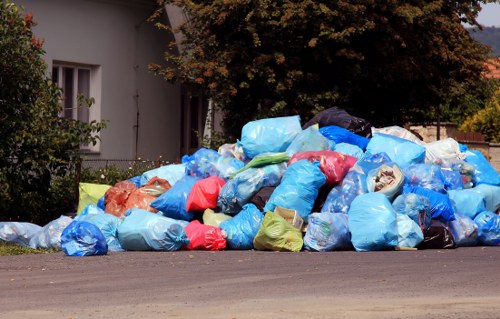 Timeframes and expectations: while many issues can be settled within a few days, more complex cases may take several weeks to conclude. Customers are kept informed throughout and given reasons for any delays. The objective is to be fair and proportionate: minor service lapses typically lead to remedial visits or refunds, whereas serious breaches related to safety or property damage will trigger immediate corrective measures and follow-up actions.
 Final notes and continuous improvement: the complaints process is not just a route to resolution but a source of learning for the clearance operation. Complaints are anonymised when used for staff training, service redesign, and area-level performance reviews. In addition to corrective responses, trends in complaints lead to changes in scheduling, crew briefings, vehicle loading procedures, and waste segregation practices so that the quality of flat clearance work improves over time. Everyone involved in providing removal and rubbish services is expected to learn from issues and demonstrate improvement.
How complaints are closed: closure will be communicated in writing with a summary of findings and any actions taken. If the complainant remains dissatisfied after the internal escalation, the procedure outlines an independent review mechanism available within the service provider structure. Records of complaints, outcomes and follow-up actions are retained to ensure accountability and to guide future service area planning. Transparency and fair treatment underpin our approach to resolving clearing disputes.
The commitments described here apply to all flat clearance and rubbish removal operations across the operator's coverage zone, whether the job is a single-room clear-out or a full flat void clearance. By following this complaints procedure, the aim is to ensure that issues are resolved efficiently, learning is captured, and service levels increase over time for all customers using flat clearance services.
Summary of key steps:
- Log complaint with clear details and evidence;
- Acknowledge within the stated timeframe;
- Investigate, communicate interim updates if needed;
- Propose resolution or remediation;
- Escalate if unresolved and provide final response.
Record keeping and review: complaints data is reviewed periodically to drive strategic improvements in waste handling, crew conduct and environmental compliance for flat clearance activities. This ensures safer, more reliable and higher-quality rubbish collection services for everyone in the target service areas.